
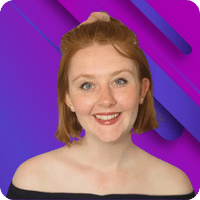
Genie Jones
About
Genie Jones is a Knowledge Graph Manager at Waikay and InLinks, where she guides the entity SEO practice and has spent five years shaping one of the most established knowledge graphs in the industry.
A first-class graduate in Language, Culture and Communications from the University of Warwick, Genie brings a rare perspective to technical SEO - one rooted in the intersection of language and data. Her work explores how probabilistic linguistic outputs from search engines and AI can be translated into structured, usable marketing intelligence.
She is the author of the AI Brand Visibility Guide and is widely recognised for her ability to make complex, technical subjects genuinely accessible to all audiences. Whether speaking to seasoned developers or marketing generalists, Genie has a knack for turning abstract concepts into practical, actionable insights.
Genie Jones | Entity Strategies That help you Get Ahead
Most SEOs still think in keywords. Search engines stopped thinking that way over a decade ago. Since Google acquired Freebase in 2010 and built its Knowledge Graph on top of it, ranking has been driven by entities: the concepts, people, places, and things that keywords merely point at. A brand that optimises for keywords without understanding the entity underneath is optimising for a system that no longer exists.
This workshop takes attendees through the full arc of entity strategy in one day. It starts with the concept itself: what an entity actually is, how search engines assign salience to it, and why this replaced keyword density as the thing that matters. It moves into practical application: how to structure internal linking around entities so a site's own architecture teaches search engines what it knows. It then extends the same thinking into AI: EntityMap, a structured knowledge layer that declares entities explicitly for AI retrieval systems, addressing the same disambiguation problem that schema markup solves for traditional search, but built for how AI systems actually retrieve and reason. The day closes by pivoting to measurement: how to track whether AI systems are representing a brand's entities correctly, and what to do when they are not.
This is not four separate topics loosely grouped together. It is one idea followed all the way through: entities are the unit search engines and AI systems actually work with. Understand the unit, structure a site around it, declare it explicitly, then measure whether the message landed.
By the end of the day, every attendee will have: an entity audit of their own top pages using the InLinks Entity Analyzer, a mapped internal linking structure built around entity hubs, a first draft of their own EntityMap, and a baseline measurement of how an AI system currently represents their brand's key entities.
Session 1: What is an entity (09:00 to 10:55, 1h 55m)
● Teaching (35 min): Entities defined: not keywords, but the concept that gives keywords meaning. The dog entity versus the word "dog". Why Google's 2010 acquisition of Freebase marked the start of the Knowledge Graph, and why the shift from keyword-based to entity-based search changed what "good SEO" actually means.
● Teaching (25 min): Entity salience explained. Term frequency versus relative frequency (why entity stuffing does not work). Positional salience (why your most important entity belongs in the title and early in the content). Semantic salience (why interlinked, related entities on a page strengthen the whole document's authority in the Knowledge Graph).
● Hands-on (40 min): Attendees take their three most important pages and run them through the free InLinks Entity Analyzer to see how many of the page's entities have actually been indexed by Google. Where the number falls short of expectation, identify what is missing.
● Discussion (15 min): Group review of findings. What patterns show up across different sites and industries. What a low entity count actually signals about a page.
Session 2: Internal linking based on entities (11:20 to 13:00, 1h 40m)
● Teaching (25 min): How search engines examine the relationships between entities across a site through internal linking. The one-main-entity-per-page rule. What a hub page is and the five things a good one does: educate on the subject, link to useful resources, help users find what they need, promote engagement, and act as the site's authority page on the topic.
● Teaching (15 min): Anchor text and synonyms. Why linking toward your most important pages using varied, contextually appropriate language (not just the exact keyword) improves how search engines read the relationship between pages.
● Hands-on (50 min): Attendees map their own site's entity structure using InLinks: identify the core entity for each key page, check whether supporting content correctly links back to the right hub, and flag any pages that try to cover more than one main entity.
● Discussion (10 min): Common structural problems found in the room, and how to prioritise fixing them.
Session 3: EntityMap (14:00 to 15:30, 1h 30m)
● Teaching (25 min): Schema markup and the sameAs tag disambiguate entities for search engines on a page-by-page basis. AI retrieval systems have a version of the same disambiguation problem, but at a much larger scale: when AI fetches and fragments your content, it loses track of which entity a passage is about and who published it. EntityMap is the structured, machine-readable file that solves this for live AI retrieval.
● Teaching (20 min): How EntityMap reduces hallucinations. Declared relationships between entities (predicates like CONFLICTS_WITH, IMPROVES) give AI systems an explicit reasoning path instead of forcing them to infer one from unstructured prose. Real evidence: what happened when an EntityMap was installed on waikay.io, including a 48-hour reversal of a three-month score decline.
● Hands-on (35 min): Attendees draft their first EntityMap entity set using the reference prompt, working from the entities and hub pages identified in Session 2.
● Discussion (10 min): How the entity work from the morning sessions feeds directly into what goes in the EntityMap.
Session 4: AI visibility and entity tracking (15:55 to 17:00, 1h 05m)
● Teaching (20 min): Once your entities are structured internally and declared externally, how do you know whether AI has actually understood them? Introduction to AI visibility tracking: measuring how AI systems represent your key entities, how often, and how accurately.
● Hands-on (25 min): Attendees run a live measurement of how an AI platform currently describes their brand's core entity or entities, comparing it against what they actually claim on their site.
● Group presentations and wrap (20 min): Attendees share their single most important finding from the day and their top priority action. Key takeaways and resources.
By the end of this workshop, participants will be able to:
● Explain what an entity is and why it replaced the keyword as the fundamental unit search engines work with
● Understand entity salience: term frequency, positional salience, and semantic salience, and how each affects ranking
● Audit a page's entity coverage using the InLinks Entity Analyzer and identify gaps
● Build an internal linking structure around entity hub pages, applying the one-entity-per-page principle
● Use synonym-based anchor text to strengthen entity relationships across a site
● Understand how EntityMap extends entity disambiguation from schema markup into live AI retrieval
● Draft a first EntityMap entity set for their own brand
● Measure how accurately an AI platform currently represents their brand's key entities, and build a 90-day action plan to improve it
Who this workshop is for
● SEO professionals and consultants who want a genuinely modern, entity-first approach to on-site optimisation
● Content strategists and information architects responsible for site structure and internal linking
● Agency practitioners looking to extend entity SEO into AI visibility as a service offering
● In-house marketing and content teams who want their site and their AI presence to say the same thing
Prerequisites
Participants should have a working understanding of SEO fundamentals. No prior knowledge of entity SEO, schema markup, or AI visibility measurement is required. The workshop builds every concept from first principles before moving to hands-on application.
Participants should come with:
● A website they know well, ideally with admin or editorial access, to work with throughout the day.
● A laptop with internet access.
● A free InLinks account, or willingness to sign up during the first session.
● Access to at least one AI platform (ChatGPT, Gemini, Perplexity, or Claude) for the Session 4 measurement exercise